
OUTSIDE THE BOX || June 2026
Welcome to June’s edition of Outside the Box. In this newsletter we share updates, tips, and opportunities from our employment programme.
Graduate News
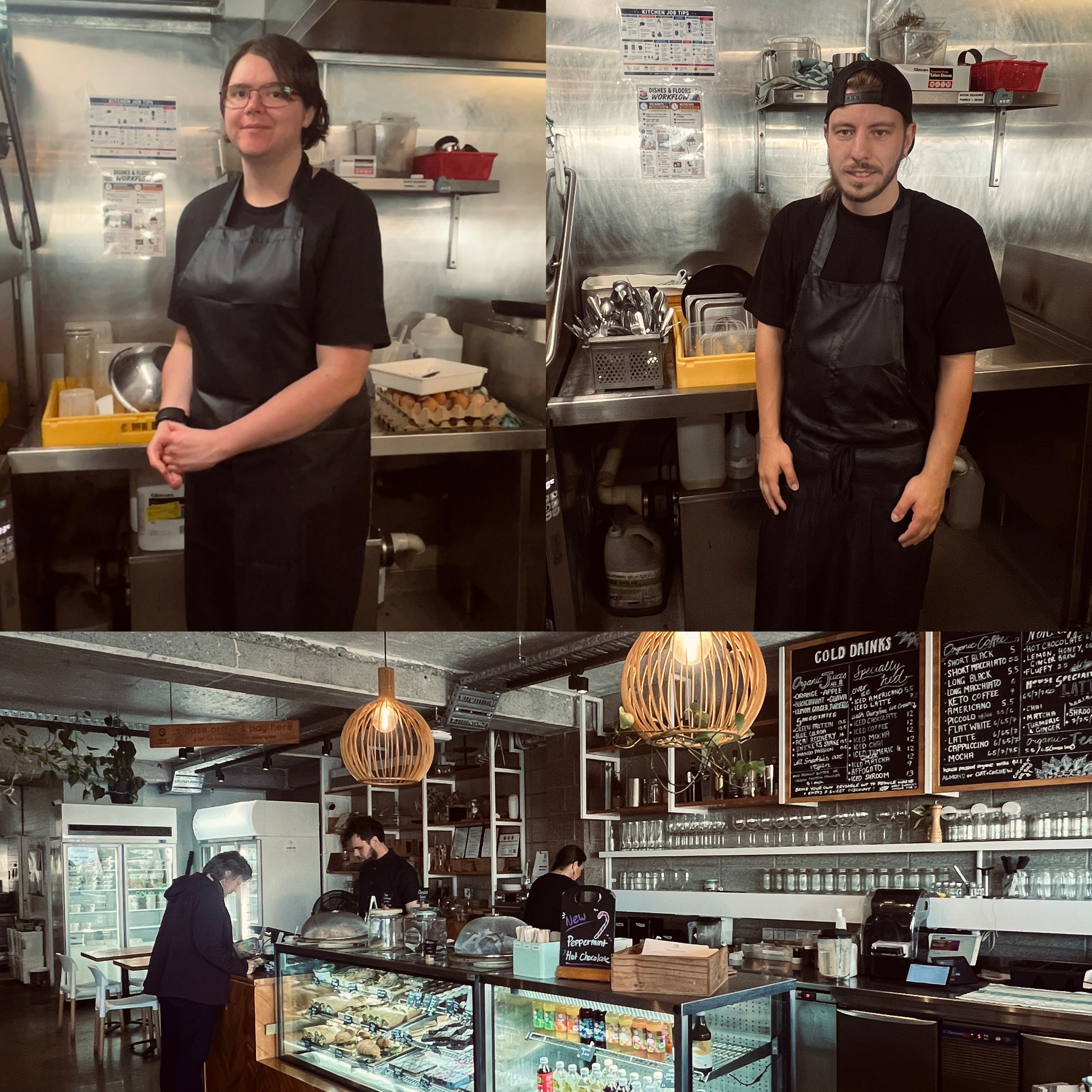
In fantastic news this month, two Project Employ graduates have been hired to work in the kitchen at Street Organics in Takapuna.
Ashley has been thriving in their role as a kitchen hand for the past six weeks and hopes to gradually move into more food preparation work, building on the experience they gained at our Air New Zealand Flourish Café.
Caleb is only a few weeks into his role and is already putting his excellent focus and work ethic to good use, powering through stacks of dishes in the busy café and helping ensure everything is ready for the end-of-shift clean-down.
The team there have fully embraced both graduates, and there is no doubt Ashley and Caleb have enriched the workplace culture while bringing reliability, dedication, and a strong work ethic to their roles.
Supporter Spotlight
We are delighted to share our new partnership with Work & Income, who are helping connect eligible graduates with wage subsidies when employment opportunities arise.
A huge thank you to Raewyn Pakenham, who has gone above and beyond to explore ways Work & Income can support our work, and in turn support both our employers and graduates on their journey into sustainable employment.
Neurodivergent Inclusion
The Relationship That Matters Most
Why a good manager can make all the difference for disabled and neurodivergent employees
An employer recently asked us how they could best support a team member who appeared to be struggling with organisation and focus. They wondered whether ADHD might be a factor, but were unsure how to approach the conversation.
It's a situation many employers find themselves in. They want to help, but don't want to make assumptions or ask questions that feel too personal.
While a diagnosis can help people better understand themselves and identify strategies that work for them, diagnoses and health information are personal and confidential. This creates a challenge. How do you provide support when you don't know what might be causing someone's difficulties or even what those challenges are?
To add to this complexity, there are significant generational differences in terms of neurodiversity diagnosis and disclosure. The recently released Neurodiversity Index 2026 found that nearly one in three people aged 18–24 identified as neurodivergent, compared to fewer than one in seven people aged 55 and over. The report suggests this may reflect differences in awareness, diagnosis, and willingness to disclose rather than a true difference in prevalence. More than half of neurodivergent employees aged over 45 reported spending many years masking or compensating at work.
For managers, this is an important reminder that not everyone who could benefit from support will ask for it. Some employees may have spent much of their working lives learning not to.
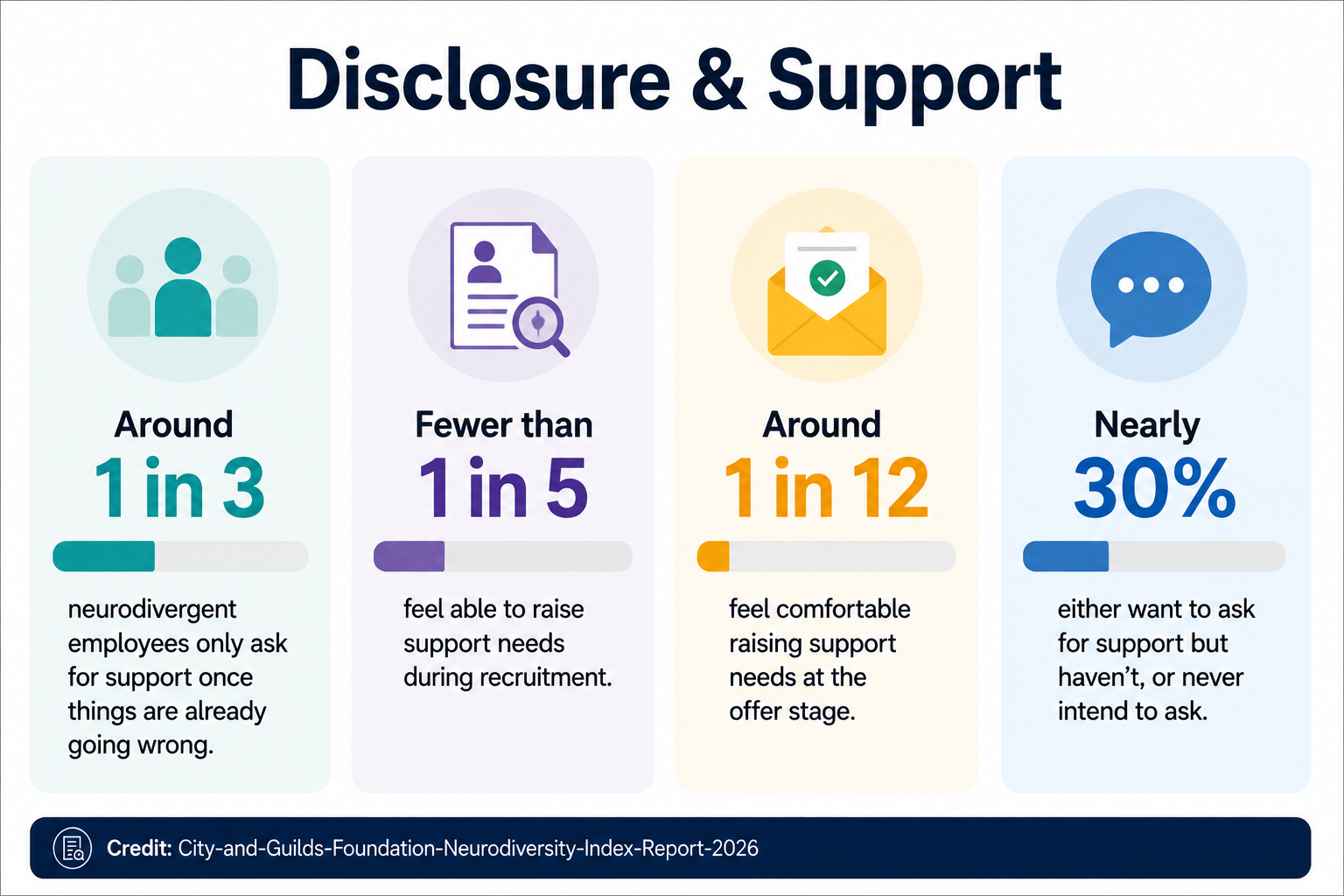
The report also found that fewer than one in five neurodivergent employees feel comfortable raising support needs during recruitment, and around one in three only ask for support once things are already going wrong. Many others either want support but haven't asked for it, or do not intend to ask at all.
This suggests that the issue is often not a lack of support, but a lack of psychological safety.
What neurodivergent employees say is important
So how can employers help?
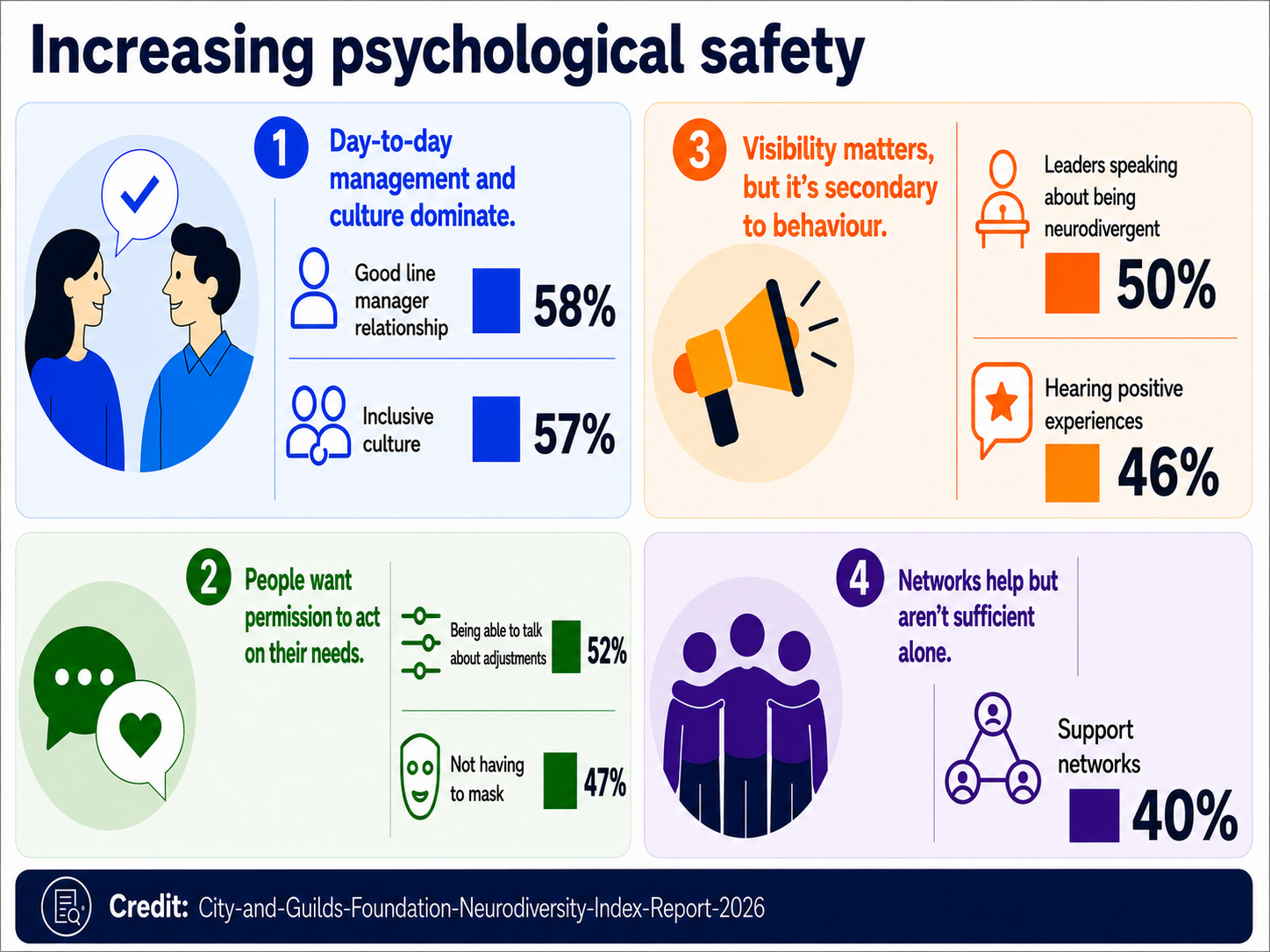
Research suggests that one of the biggest factors in an employee's experience at work isn't a policy or a workplace adjustment. It's their relationship with their manager.
In fact, the Neurodiversity Index found that the strongest predictor of psychological safety at work was having a good relationship with a manager, ranking higher than formal policies or support programmes.
Good policies matter. They create consistency and clarity. But even the best policy cannot replace a manager who listens, follows through, and creates an environment where people feel safe asking questions, making mistakes, and discussing what helps them succeed.
At Project Employ, we have found that our graduates tend to perform best when they report directly to one person with whom they have built a strong, trusting relationship. For people with autism, learning differences, or intellectual disabilities, having multiple reporting lines or several people providing personal support can sometimes create confusion and uncertainty about who to approach.
This does not diminish the importance of positive relationships across the wider team. Strong team connections remain valuable, but having one clear point of contact for guidance, feedback, and support often provides greater consistency and clarity.
Tips for Managers
Be curious rather than assumptive. Focus on what support someone needs rather than why they might need it.
Remember that for neurodivergent folks, nervous system overload happens more easily and behavioural issues are often not actually about behaviour.
Schedule regular check-ins rather than waiting for problems to emerge.
Provide clear expectations and follow up important conversations in writing where appropriate.
Create one clear point of contact for support whenever possible.
Normalise conversations about workplace preferences and support needs for all staff, not just those with disclosed disabilities.
Project Employ offers disability confidence and neurodiversity training to employers working with our graduates. Understanding how different people experience the workplace can help managers build confidence and create environments where everyone can thrive.
For employers wanting to continue their learning journey, New Zealand organisations such as Te Uru Tangata, Autism NZ, Kia Roha, OneinSix and NZDEN also provide valuable resources, training, and support.
To read more about the stats above click here: City and Guilds Foundation Neurodiversity Index Report 2026
Worth Sharing
The NZDEN Disability Inclusive Pathways Conference is coming up on 4–5 August at the Pullman Hotel in Auckland. If you're an employer looking to build a more inclusive workplace for disabled people, we highly recommend attending.
We learn so much every year, and it's always inspiring to connect with so many forward-thinking employers who are committed to creating meaningful opportunities. If you've been considering how your organisation can become more disability inclusive, this is a fantastic place to start.
We hope to see you there – it's well worth it!