
OUTSIDE THE BOX || MAY 2026
Welcome to May’s edition of Outside the Box. In this newsletter we share updates, tips, and opportunities from our employment programme.
Whiria Ngā Kaha Workplace Inclusion Aotearoa Conference
This week, Project Employ had the great pleasure of attending Whiria Ngā Kaha, New Zealand’s premier workplace inclusion conference. Hosted by Te Uru Tangata Centre for Workplace Inclusion, the conference brought together people from across Aotearoa who are passionate about building workplaces where everyone can thrive. If you haven’t come across Te Uru Tangata before, they are also the team behind New Zealand’s Diversity Awards, the Workplace Inclusion Barometer and a range of practical toolshelping organisations better understand and improve workplace inclusion.
One of the real highlights for our team was hearing Project Employ mentioned by two incredible Diversity Award winners. Ed Collett, Head of the Air NZ Enable employee network and proud Project Employ ambassador, gave us a shout out during his speech. We were also thrilled to get a mention from Hind Management, owners of our partner Sudima Hotels. It’s always pretty special seeing all our hard work recognised on a national stage. Fingers crossed to see a few more of our wonderful employers up there next year!
A big takeaway from the conference came from Shamubeel Eaqub, Chief Economist at Simplicity NZ. He spoke about how New Zealand is becoming more diverse, while at the same time more people are feeling disconnected and isolated. His point was simple but powerful — workplaces are where most of us spend most of our time, and they have the potential to become places of real connection and belonging. He also made it very clear that inclusion is not just a “nice to have”. Inclusive workplaces are better for people, better for business and better for the economy.
You can check out Shamubeel’s social cohesion research here.
The biggest barrier our graduates face is rarely capability. More often, it’s finding workplaces that are willing to think differently and create pathways and environments where all people feel supported to succeed. That’s why it was so encouraging to spend time in a room full of people doing the hard mahi to make workplaces more inclusive, more human and ultimately better for everyone.
Graduate News
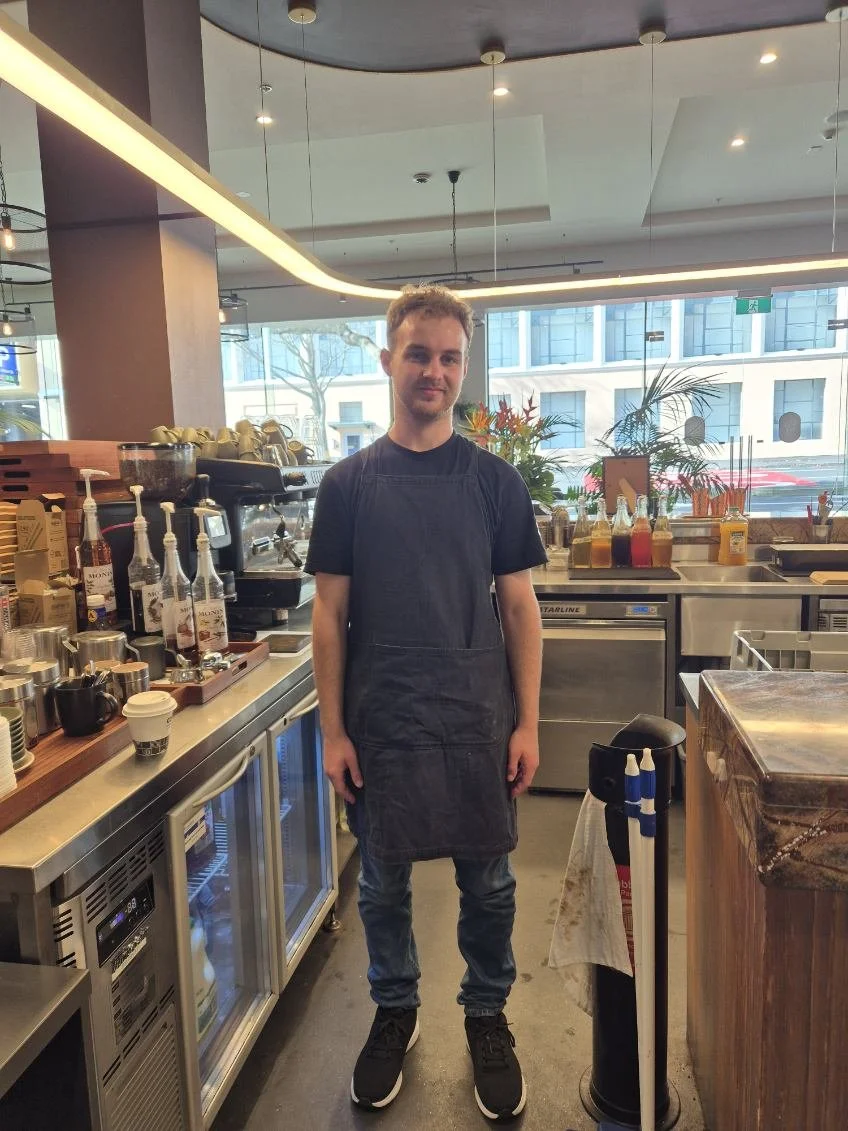
Our graduate, Liam, has been thriving in his new internship at the Sudima Auckland City hotel.
Liam graduated from Project Employ in June 2025, and this is the first opportunity that has come up for him since graduating. He was absolutely thrilled to finally get the chance to build more skills, confidence and experience in a busy hospitality environment.
Like many people starting a new role, Liam felt nervous in his first week. But he has quickly grown in confidence and is now working independently in the restaurant, clearing tables, polishing dishes, keeping the buffet tidy and helping the team create a great experience for guests.
We are so proud of you, Liam, and excited to see where this journey takes you next!
Supporter Spotlight
We’re very pleased to welcome three new Project Employ ambassadors.
Our ambassadors generously use their networks, influence and experience to help us connect with employers and share the work we do. They play a vital role in opening doors for our graduates, and we’re really grateful to have them on board.
They join our existing ambassadors — Angela Bloomfield, Shane Cortese, Terence Harpur and Claire Turnbull — who continue to champion inclusive employment across Aotearoa.
Ed Collett
Ed is a strong advocate for inclusive employment, with his leadership at Air New Zealand and his lived experience as a parent of two sons with disabilities shaping his commitment to removing barriers and improving access to work.
He was recently named Inclusive Leader of the Year at the NZ Diversity Awards.
Janet Marshall
Janet is a Director at Colliers and a commercial property specialist with deep connections across Auckland’s business community. She is passionate about using her networks to connect businesses with inclusive employment opportunities and create meaningful outcomes for both employers and people.
Kris Edwards
Kris is a well-known Auckland broadcaster on The Breeze and Content Director of the network. He also hosts podcast series including The Cerebral Palsy Podcastand The Para Podcast, using his platform to share stories from disabled communities and para-athletes across Aotearoa. He brings a strong advocacy voice and community reach to the ambassador group.
Neurodivergent Inclusion
What does neuro-affirming mean in a workplace?
A neuro-affirming approach means recognising that different brains work in different ways, and that these differences are a normal part of human diversity.
Rather than focusing on “fixing” individuals, it focuses on creating environments where people can do their best work. In practice, this means asking what support, structure, or flexibility might help someone succeed, rather than assuming they are not trying hard enough.
This month, here’s an example of a neuro-affirming approach to emotional regulation differences.
What does “emotional regulation differences” mean, you ask?
Struggling with emotional regulation is increasingly recognised as a core feature of ADHD, as well as other forms of neurodivergence. In the workplace, emotional dysregulation is often misunderstood, especially if they’re seen through the lens of “overreacting” or “not coping”. But this isn’t about personality or professionalism — it reflects how the brain processes emotion, stress and feedback in real time.
Rather than emotions building gradually, they can arrive quickly and with intensity. A piece of feedback might feel overwhelming, frustration can spike fast, and it can take much longer for someone to come back to a calm, problem-solving state.
For many neurodivergent people, stressors can build on top of each other with less opportunity to return fully to a calm baseline between emotional spikes.
There are a few reasons for this. ADHD is linked to differences in executive functioning, including the brain’s ability to pause, filter and regulate emotional responses before reacting. Under pressure, those skills become even harder to access. Many people with ADHD also experience stronger sensitivity to perceived criticism or rejection, which can intensify emotional responses in the moment. When feedback feels harsh or blaming, it can trigger shame — and shame often escalates, rather than resolves, the behaviour a manager is trying to support.
It’s important to be clear here: these reactions are not intentional, and they’re not something people can simply “decide” to control better. They are nervous system responses, not attitude problems.
A neuro-affirming approach starts from that understanding. Instead of focusing on “calming down” or “not reacting”, it asks: what helps someone recover, reset, and stay engaged after something difficult?
Employer tips:
Assume difference, not disregard. Emotional intensity is part of ADHD for many people. It’s not a lack of professionalism or care.
Keep feedback clear and grounded. Be specific, factual, and calm. Avoid vague or loaded language that can easily be misread in the moment.
Separate behaviour from identity. Focus on what happened and what needs to change, not who the person is.
Don’t expect instant processing. Some people need space after feedback or conflict before they can respond constructively.
Stay steady in tone, especially under pressure. Calm communication helps regulate the situation far more than escalation ever will.
Focus on repair, not blame. “What do we do next?” is usually more effective than “why did this happen?”
Normalise regulation time. A short pause to reset is often what allows someone to re-engage well, not disengage further.
Notice strengths as well as difficulties. Support works best when it’s balanced with recognition of capability, not just correction.
At its core, emotional regulation improves in environments where people feel safe, respected, and not shamed for how they respond under stress. With the right supports in place, many employees with ADHD are able to recover quickly, reflect more effectively, and stay engaged without getting stuck in the emotional fallout of difficult moments.
Graduates Seeking Employment
Caleb 🌟
Caleb says his top three values are kindness, reliability and teamwork. He’s social and loves to work as part of a team.
Caleb likes the idea of working outdoors or possibly something with animals. He doesn’t mind getting his hands dirty!
In his spare time, he’s a big music fan and he really likes to get out into nature.
Juan 🌟
Juan’s top three values are positivity, learning new things and teamwork. This really reflects his upbeat, helpful personality.
He’s a creative guy who enjoys acting, poetry, music and dancing. He would love to work somewhere nice and calm with a great community vibe. He’s also up for outdoor work and says he’s really fit!
Worth Sharing
We’re proud to share our collaboration with Whaikaha – Ministry of Disabled People, contributing to their new website which aims to boost employment opportunities for disabled people. The site is packed with useful tips for employers and is growing every day. Check it out here: One in Six